Get Back To Feeling Like Yourself! We Are Accepting New Patients. Currently servicing British Columbia, Alberta and Ontario.

Top Early Signs of Perimenopause & How to Find Relief!

If you’re in your 30s or early 40s and have taken your concerns to a doctor, chances are you’ve heard the familiar line: “Your lab work looks completely normal”

"Your Labs Are Normal"- So Why Do You Feel So Off?

Standard blood tests only show a single moment in time. In early perimenopause, hormones fluctuate wildly from day to day, meaning a “normal” lab result just shows you fell within a broad range the morning of your draw. It doesn’t mean your body isn’t experiencing real, disruptive shifts.

Early Perimenopause
Age 35- 42
  • Shorter cycles
  • Worsening PMS
  • Sleep disturbance (i.e. 3am)
  • Anxiety/ Irritability
  • Headaches before a period
  • Heavier flow and blood clots on the first days

woman in painful expression holding hands against belly suffering menstrual period pain, lying sad on home bed, having tummy cramp in female health concept
Active Perimenopause
Age 42-48
  • Irregular/ Skipped periods
  • Hot flashes/ Night sweats
  • Brain fog
  • Mid section weight shifts
  • Persistent fatigue
  • Increased anxiety and mood changes
tired african woman work on laptop at home with a fan too hot from hot flashes in perimenopause
Late Perimenopause
Age 48-52
  • Skipping periods/ long gaps between
  • Vaginal dryness & sensitivity 
  • Urinary urgency/ Stress incontinence
  • Joint stiffness and aches
  • Decrease in libido
  • Persistent night sweats and hot flashes
  • Feeling mentally "unwell"
Stress and fatigue from menopause
Postmenopause
51-53+
  • Permanent cycle cessation
  • Hot flashes lessen
  • Slowed baseline metabolism
  • Skin and elasticity changes
  • Persistent vaginal dryness and bladder weakness
  • Persistent insomnia
sleepless mature woman lying in the bed.

Understanding Estrogen Dominance & Spikes in Early Perimenopause

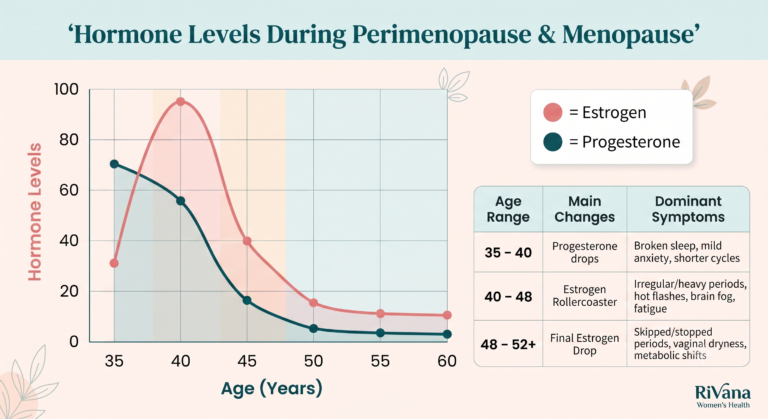
Estrogen doesn’t just plummet, it often spikes first! Between ages 35 and 42, dropping progesterone causes wild estrogen surges. This “estrogen rollercoaster” triggers heavy periods, breast tenderness, bloating, and anxiety before levels eventually crash.

Chart of estrogen and progesterone hormone levels by age during perimenopause and menopause

How To find relief?

You don’t have to navigate these debilitating symptoms alone. A personalized blend of  bio-identical hormone therapy and non-hormonal treatment options could help stabilize your levels, ease your symptoms, and get you back to feeling like yourself again.

Find out what your options are

Disclaimer: This Article is for educational and information purposes only and does not constitute medical advice. Always consult with a qualified healthcare provider to discuss your personal health history, diagnosis, and treatment options

Menopause stage assessment: Understand your transition!

What stage of menopause are you in?

Navigating the changes in your body can be overwhelming, but you don't have to do it alone. This 2-minute assessment is designed to help you identify whether, and where, you might be in the menopause transition.

Answer a few questions about your recent cycles and symptoms to identify your probable stage of menopause. At the end, we will provide an initial guide to your current stage.

Note: This assessment is a guide and does not replace a clinical diagnosis. If you have urgent concerns, please reach out to us directly.