







Expert Virtual menopause Care
(Often covered by private health insurance or hSA's)
Relieve Perimenopause & post menopause Symptoms with Specialist Support
At our virtual menopause clinic, we provide specialized menopause support tailored to your unique journey. Whether you are navigating the early signs of perimenopause or managing post-menopause symptoms, our expert team offers personalized care from the comfort of your home.
We specialize in evidence-based hormone therapy (HRT) to find the right balance for your body, while also providing effective non-hormonal symptom help when necessary. From relieving hot flashes and mood swings to improving sleep and energy, we are here to help you feel like yourself again. Book your virtual consultation today and start your journey to lasting relief.
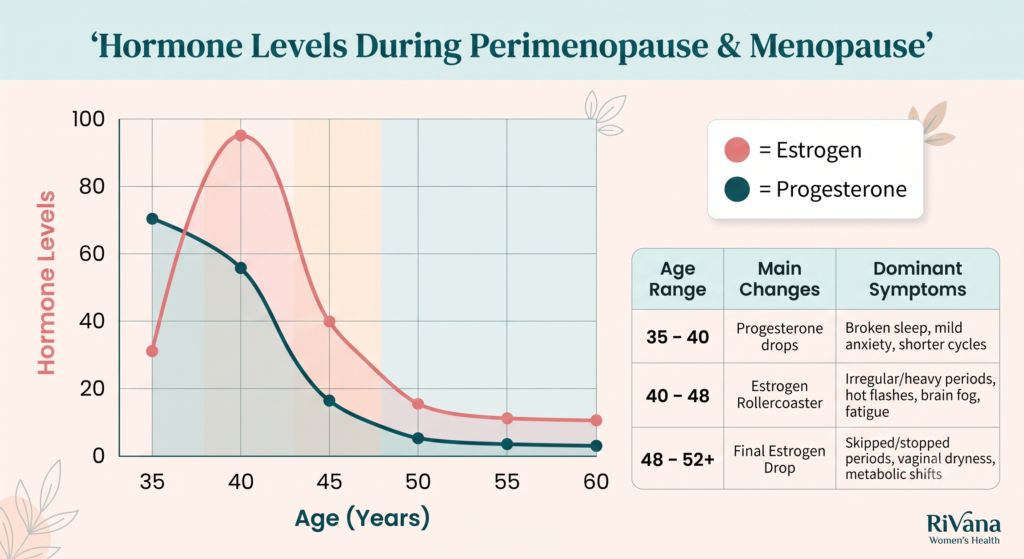
Menopause is a natural life phase marking the end of menstrual cycles as the ovaries produce less estrogen and progesterone. This transition can influence physical, emotional, and metabolic wellbeing, and every person experiences it differently.
There are several stages within the menopause journey, each with its own characteristics and typical age ranges:
Early Perimenopause (usually mid–30s to early 40s):
Hormone levels begin to fluctuate, but cycles may still appear regular. Subtle symptoms such as sleep disturbances, mood shifts, increased PMS, or occasional hot flashes, may start to appear.
Late Perimenopause (typically mid–40s to late 40s):
Cycles become noticeably irregular or spaced out. Symptoms often intensify, including hot flashes, night sweats, brain fog, irritability, low libido, and vaginal dryness.
Menopause (most commonly between 45–55):
Defined as 12 consecutive months without a menstrual period. Symptoms may continue but hormone levels stabilize at their lowest point.
Post-Menopause (from menopause onward):
Some symptoms may ease, while others like vaginal dryness, sleep issues, or urinary changes, may persist. Long-term health shifts related to low estrogen become more important to monitor.
Symptoms of Menopause:
Menopause involves over 34 recognized symptoms, extending far beyond the stereotypical hot flashes and night sweats.
- Hot Flashes/ Night Sweats
- Irritability/ Anxiety/ Depression
- Insomnia
- Irregular/ Heavier Periods
- Low Libido/ Vaginal Dryness
- Weight Gain
- Headaches/ Migraines
- Gum Issues/ Burning Tongue
- Osteoporosis
- Dizziness/ Vertigo
- Fatigue
- Brain Fog
- Hair Thinning/ Dry Itchy Skin
- Urinary Incontinence
- Joint Pain/ Stiffness
- Digestive Issues/ Bloating
- Urinary Tract Infections
- Electric Shock Sensations
- Sore Tender Breasts
- Brittle Nails
- Muscle Mass Loss/ Tension
- Ringing In The Ears
- Increased Heart Rate
- Memory Lapse
Benefits of Hormone Support: Treat menopause Symptoms
What happens without hormone support:
Some women may choose not to use hormone support or may not be able to use it. This can mean managing menopause symptoms with non-hormonal strategies instead. It’s important to discuss options with a healthcare professional to determine the safest approach for your health and symptoms.
What can happen without support:
- Increased long term health considerations
- Ongoing uncomfortable symptoms
- More frequent sleep disruption
- Greater impact on mood and wellbeing
- Increased likeliness of needing life styles changes
With hormone support:
Hormone support can help restore balance and reduce bothersome menopause symptoms. It may also support long-term wellness when used appropriately, but it is not suitable for everyone. A healthcare professional can help determine whether hormone support is a safe option based on individual health history and needs.
How it Can help:
- Improved sleep
- More energy
- Improved sexual wellbeing
- Better mind clarity
- Helps reduce both short-term and longer-term menopause symptoms
Get back to feeling like yourself! Book with us today!
HRT is not for everyone
Contradictions for estrogen therapy in women
Estrogen therapy is generally avoided if a patient has a history of certain hormone-sensitive conditions or vascular risks:
A current or past diagnosis of breast cancer or uterine (endometrial) cancer.
A history of Deep Vein Thrombosis (DVT), Pulmonary Embolism (PE), or recent stroke/heart attack. (Transdermal Estrogen May Sometimes Be Considered)
Any unexplained vaginal bleeding that has not been medically evaluated. (Must be investigated before HRT)
Severe liver disease or impaired liver function.
Untreated endometrial hyperplasia (thickening of the uterine lining), can become cancerous if estrogen is given without proper progesterone protection.
Estrogen is not administered during pregnancy or while breastfeeding.
Contradictions for testosterone therapy in women
While testosterone can support energy and libido in women, it is strictly avoided in the following cases:
Current pregnancy or plans to become pregnant (testosterone is teratogenic)
Severe active cystic acne or significant hirsutism (excessive hair growth) that could be exacerbated.
Elevated hematocrit levels (polycythemia), as testosterone can further increase red blood cell production and clot risk.
Testosterone is used cautiously in women with liver disease because it is processed by the liver and can potentially worsen liver function or liver damage.
Current breast or uterine cancers and some Ovarian Cancers, as testosterone can partially convert to estrogen in the body.
Testosterone is used cautiously in women with heart disease and uncontrolled high cholesterol because it can potentially worsen cardiovascular strain and increase the risk of heart attack.
When Hormone Support is NOT an option
If Hormone Balance Support is not a suitable option for you, either due to personal preference or medical necessity, there are various non-hormonal alternatives we can use to help manage specific symptoms.
Is non-hormonal support safe:
Non-hormonal support may be used on its own to help manage certain postmenopausal symptoms. When recommended appropriately, non-hormonal options are generally considered a safe choice for many postmenopausal women.
Benefits of non-hormonal:
- Improves night sweats/ hot flashes
- Help to improve sleep
- Mood stabilizing calming effect
- Mild side effects
- Low overall health risk
- Contact us to discuss more about benefits and options
Benefits of Non-Hormonal Options
Non-hormonal strategies may help reduce night sweats and hot flashes, improve sleep quality, support mood stability, and promote overall wellbeing. These approaches are generally considered low risk when used appropriately and under the guidance of a healthcare professional.
Non-hormonal strategies to consider:
- Life style changes: exercise, diet and weight management
- Sleep Support
- Stress and mood support
- Cooling techniques
- Supportive therapies